Exploring the promise of Web3 gaming in Cambria
Drawing on our own play, we look at Cambria's gameplay, its reward structure and the promise of the Genesis season
- Sector
- Gaming
- Assets
- $RSGP
- Published
- 2026-10-26by TimeisGold
What brought us to Cambria
KDP likes to experience different corners of crypto firsthand. Gaming was one of the sectors we had been watching, and Cambria caught our eye as we looked through various projects
What first drew us in was a game that combines PvE hunting and PvP competition on familiar pixel graphics. Rather than repeating quests for rewards, you build your own way of playing by working with or against other players, and that appealed to us. Above all, it looked like a game we could enjoy for its own sake, rewards aside
At first the game was hard to learn: there was little information in Korean and few Korean players. But over several seasons we joined overseas guilds and played in many ways, from hunting and gathering to cooperating and competing with other players
In this piece we look at the fun and the reward structure of Cambria Gold Rush as we found them in our own play, and at what changes in the coming Genesis season
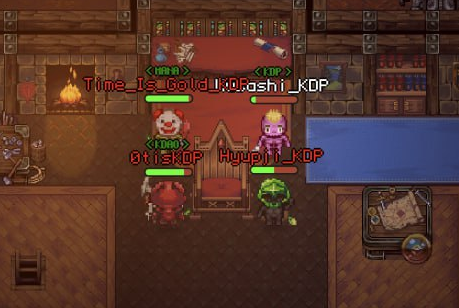
KDP playing in the MANA guild during S2 · View on X
How Cambria is played
Cambria is a pixel-art MMORPG played in the browser. Players share one world, where they hunt monsters, gather resources, craft and trade gear, and grow. They can also team up with other players or compete with them through PvP
Gold Rush, the mode we played, runs in seasons. The basic loop is to prepare gear and consumables in town, set out on an expedition, and come back with the loot from hunting and gathering
In town you sell the resources you gathered or craft new gear for the next expedition. Players who like fighting focus on hunting and PvP, while those who prefer gathering and crafting take part in other ways
Expeditions carry risk and cost, of course. You need gear and consumables such as food and arrows, and dangerous regions also use up Energy, a paid resource. Even good loot can leave you at a loss if the expedition cost more
The coming Genesis season is an attempt to extend this Gold Rush experience into a more lasting world and economy. We look at what exactly changes later in this piece
Our Gold Rush play in this piece comes from our time in MANA during S2; the region, gathering and death rules and the reward structure follow S3 material. Genesis details follow the public documents and the October 25, 2026 testnet.
Prepare your gear and learn a way of fighting that suits you
How you fight depends on the weapon you choose. You can close in with swords and blunt weapons, keep your distance with bows and crossbows, or use magic
Players grow their characters by raising their weapon and armor proficiency. Genesis also adds a Talent system that helps in attack and survival
At first it is best to pick one main weapon and get used to fighting with it. Once you have consumables such as food and arrows ready, you can set out on expeditions in earnest
Risk and reward change with the tier
Cambria grades regions, monsters, resources and gear by Tier (T). From T1 to T5, a higher number means a higher grade; each kind of thing is graded on its own, so tiers are a different idea from character level
In Gold Rush season 2 you could start by gathering copper and tin, T1 resources, in the safe zone. Moving to higher-tier regions brings more chances at valuable resources and loot, but the cost and risk of expeditions grow with them
In particular, Energy use and what you lose on death change with the region's tier. Different rules also applied to PvE deaths, at the hands of monsters, and PvP deaths, at the hands of other players
The table below sets out the losses in the normal state, based on last season's Energy and death rules
| Zone | Energy use | PvE death | PvP death |
|---|---|---|---|
| T2 Yellow Zone | Base rate | All items kept 50% durability loss |
All items kept 50% durability loss |
| T3 Red Zone | More than T2 | Weapons and armor kept 50% durability loss |
All but the most valuable item lost Durability loss on dropped gear |
| T4 Deep Red Zone | More than T3 | Weapons and armor kept 75% durability loss |
All but the most valuable item lost 75% durability loss on gear the opponent recovers |
| T5 Black Zone | More than T4 | Weapons and armor kept 75% durability loss |
Same as T4 |
The same rules did not apply to every item, though. Basic tools, quest and unique items, Silver and some others were classed as protected items. There was also Gear Savior, a protection effect that kept your equipped gear on a PvP death with a certain chance
The death rules were still being written at the time, so some points were unclear, such as what happened to unsettled loot in your bag and the exceptions for the chaos state
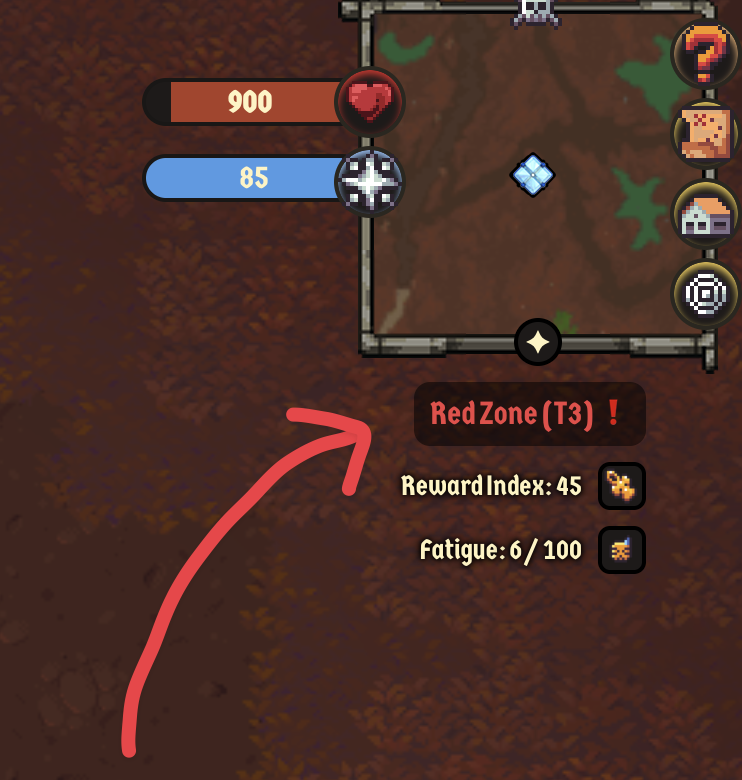
An in-game screen from S2. Below the minimap, labels such as Red Zone (T3) show your current region and tier
In the end, a higher tier does not always mean more profit. Even with good loot, you can come out behind once you count the consumables and Energy spent on the hunt and what you lose on death
So it matters to choose a region that fits your gear and proficiency, and to weigh the cost of the expedition and your chances of getting back safely
The chaos state, apart from the region
In Gold Rush, what you lost on death depended not only on the region's tier but also on the chaos (Outlaw/Skull) state. Where Red Zone marks a dangerous region, chaos is the state in which your character's name turns red after you attack another ordinary player first
In the chaos state city guards attack you, and you were told you would lose all gear and items on death, whatever the region.
The mark clears after four hours whether or not you are logged in, but attacking another ordinary player first again resets the timer. However, PvP in T5 regions did not bring on the chaos state, and kills made with traps had their own exceptions
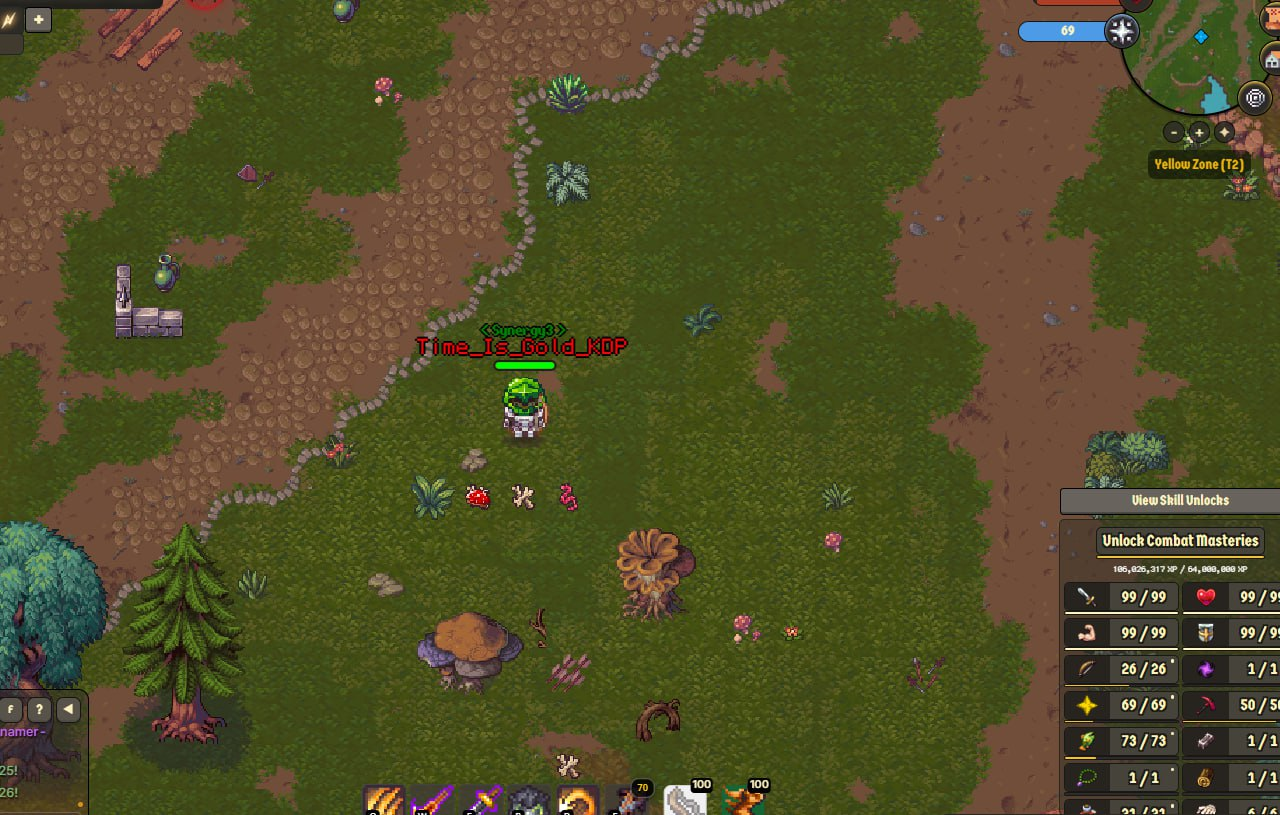
The chaos state, with the character's name shown in red in a Yellow Zone (T2)
Loot from hunting and gathering
In Gold Rush you could find special loot by hunting monsters, gathering resources and searching treasure chests. It falls into three kinds, by how you get it
- Artifact: relics from hunting monsters
- Curio: loot that can turn up while mining, gathering or logging
- Gem: loot from treasure chests

The loot then grouped as Corrupted Loot. From left: Gem, Curio and Artifact
You could bring this loot to town and settle it for Silver and Royal Favor. Your chances of Artifacts and Curios depended on the difficulty of the monsters and resources and on the reward multiplier during the expedition, and the reward for each monster kill was random. Staying active in dangerous regions raised the multiplier, but it reset when the expedition ended
Artifacts gathered in your bag are loot you have not settled yet. Keeping apart the Artifacts you carry while hunting and the Silver you have settled in town makes it easier to see what rewards you are collecting and what you could lose on death
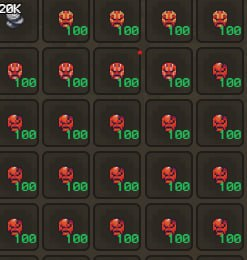
Artifacts gathered from hunting. Loot collected in the bag like this was taken to town and settled
Gathering: finding and collecting resources
Besides hunting, you can take up gathering activities such as mining, logging and fishing. You check where the resources you want are on the map, get the tools and proficiency you need, plan your route and set out
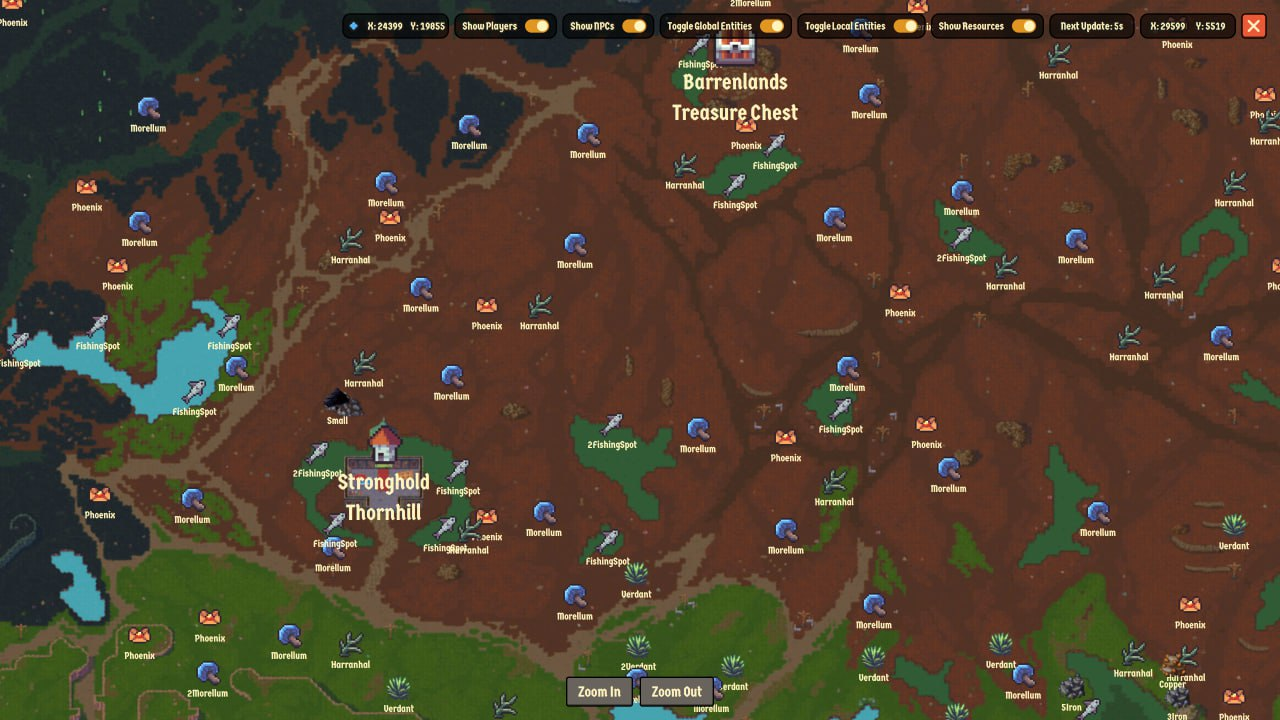
Resource locations marked on the map, such as FishingSpot, Copper and Iron
At fishing spots you can get materials such as fish and Raw Kelp, and players sometimes gather in one place to fish together
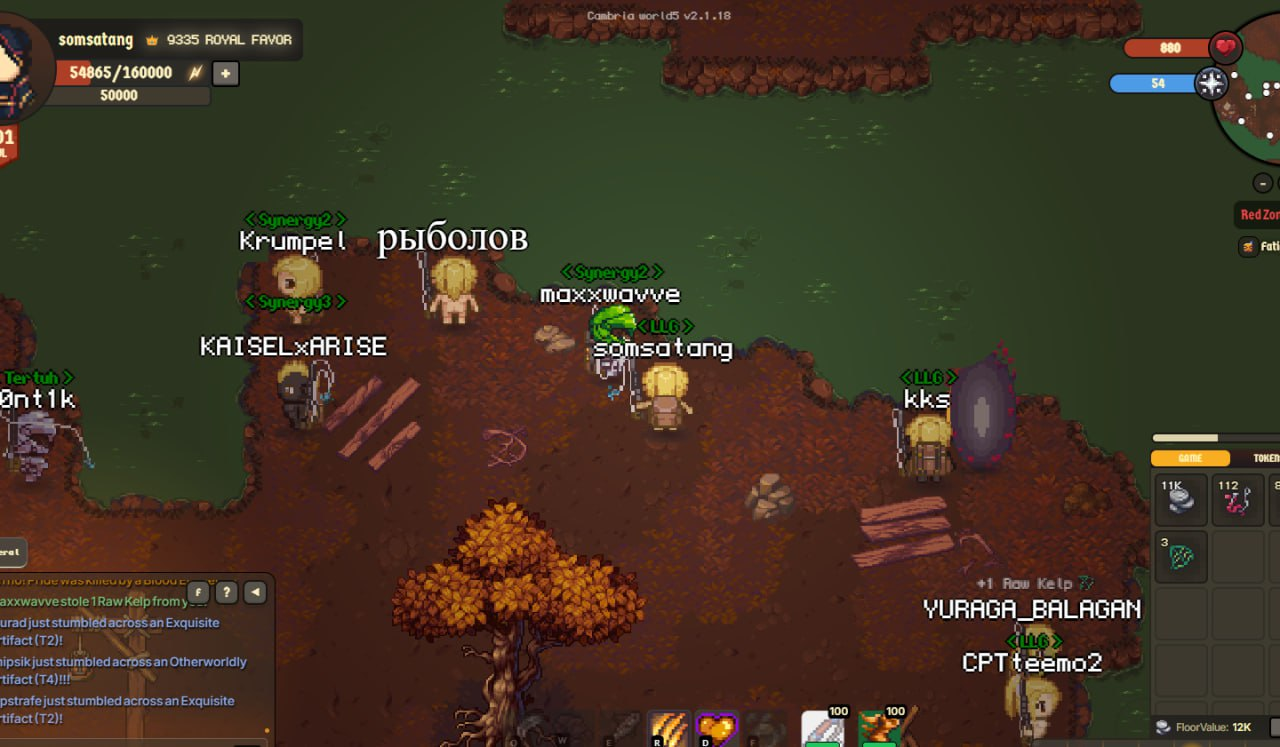
Players fishing at the same waterside
However, a resource shown on the map is not always one you can gather from the start. You have to raise your proficiency on lower-tier resources before you can gather higher ones. Last season you could start with T1 copper and tin, but mining T4 Adamantine took proficiency 80
Resources you gather can be sold as they are or refined for crafting gear. Curios, found on the side while gathering, are loot that settles for Silver and Royal Favor, unlike ordinary materials.
Take mining: you find a vein on the map, dig ore with a pickaxe and head back to town. The ore can be sold to other players or refined for crafting gear. Any Curio you find while mining is settled separately for a reward. So even without crafting gear or fighting yourself, you can take part in the game's economy just by gathering and trading resources.
What you must keep in mind when gathering is the state of your tools and the weight of your load. Tools lose durability as you use them, and as your load grows heavy with resources, your movement suffers. So you have to consider not only how much you can collect but also the state of your tools, how much you can carry and a route that gets you back safely.
You meet other players while hunting and gathering
If fighting monsters is PvE, fighting other players is PvP. In Cambria you can run into other teams while hunting or gathering, and fights break out over the loot you have collected. Losing a fight can cost you your gear and loot, so you keep having to decide whether to keep hunting, fight or head back to town.
Late in a hunt your health and consumables may be running low, and while gathering it matters to bring your resources back safely. So it is hard to focus only on the monster or resource in front of you. Protecting what you found and getting it home is part of the expedition too
With teammates you can handle danger more flexibly. One person collects the loot while another keeps watch, and when other players approach you can face them together or secure a way out. Teamwork in splitting roles and deciding when to fight or fall back also matters.
We went through these situations together over several seasons and tried out strategies that suited our team. The one we remember most was setting traps at the exits to catch players passing through. Back then hardly anyone used traps, so opponents were not used to them, and most of the players we met at the exits walked right into them
So results depended not only on gear and fighting skill but on how you used the terrain, items and teamwork. Some strategies were so strong that they were adjusted by a hotfix during the season
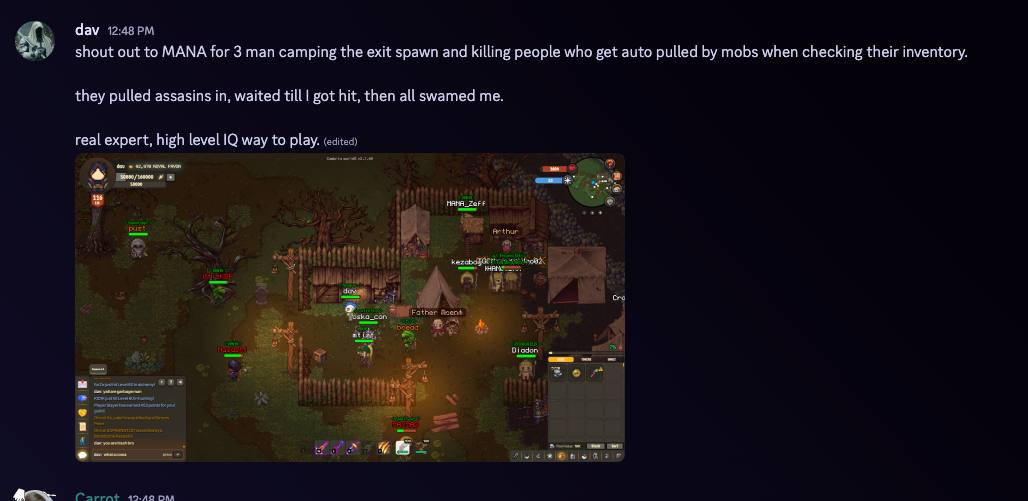
An excerpt of what an opponent who 'admired' our strategy wrote on Discord
Back in town: settling and trading loot
When you bring your haul back to town, you store what you need and settle, trade or craft with the rest
In town Sir Althus settles loot such as Artifacts, Curios and Gems for Silver and Royal Favor, and Arthur stores the items in your bag in the warehouse.
Crafters turn the materials gatherers bring in into gear and consumables, and players who enjoy fighting buy them for their next expedition. In this way hunting, gathering, crafting and trading link up into an in-game economy.
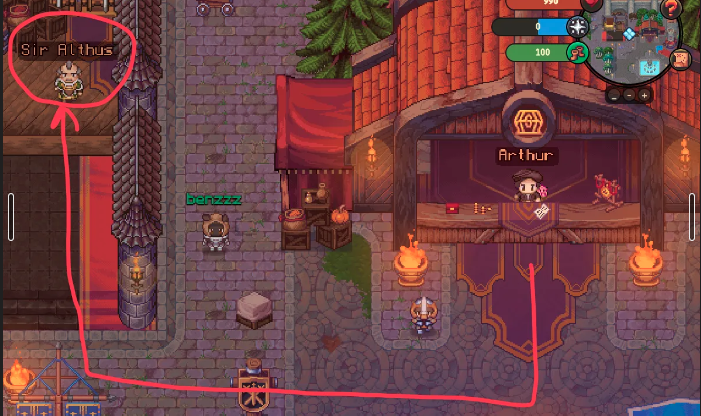
The town where loot was settled and items stored last season
Cooperation carries on outside combat
In Cambria cooperation reaches beyond combat into preparing expeditions and sharing rewards. Before setting out together, you agree on each person's role and on how to share the cost of gear, consumables and Energy
After the expedition you settle the loot you brought back and split the rewards by the rule you set in advance. In the end, how you share what you earned together and prepare the next expedition is also a big part of cooperation.
How game currency turned into real rewards
In Gold Rush you could settle the loot from hunting and gathering in town for Silver and Royal Favor. Silver was then the basis for sharing out the real prize money after the season ended
The reward structure is simple: you received a share of the prize money equal to your share of all Silver in the season. Silver was not exchanged at a fixed price; rewards depended on the size of the final prize pool and the total Silver issued
In the final S3 settlement, the prize money allocated to Silver came to about $1.28 million, and the final Silver total was about 41.5 billion. On that basis:
| Silver held | Reward at the dollar value then |
|---|---|
| 1 million Silver | About $31 |
| 10 million Silver | About $310 |
Ronin announced individual rewards in USDC at the time, and the final settlement published the dollar value of the reward pool, counted in ETH and RON. You needed at least 300,000 Silver to receive a reward
Of course, these amounts are examples calculated from the final S3 settlement and do not mean a fixed exchange rate or an hourly income. To work out real profit you also have to take off the cost of Energy, gear and consumables used on expeditions
In the end what mattered was not how much loot you found but how much Silver you still held when the season ended, and how much you spent along the way. It was a structure in which repeating steady expeditions could pay better than pushing into high tiers
How the Genesis season differs from the last
Where Gold Rush was about competing for about ten days and then settling rewards, the Genesis season extends toward staying longer in one world and growing its economy and your character.
Comparing the main changes from the public documents:
| Item | Gold Rush | Genesis season |
|---|---|---|
| Play period | Season ends after 10 days of competition | A lasting world and growth by role |
| Currency and rewards | Prize money shared by share of Silver held | Gold reward settlement split from a Silver trading economy |
| Charter | Season pass with benefits such as Energy recovery | Founding NFT with House, Home City, Affinity, delegation and sponsorship |
| Energy | Daily Charter recovery and Energy Orb top-ups | Bought with USDC, used outside the main cities |
| Cooperation | Working together around hunting, gathering and PvP | Extended to running regional strongholds, crafting, transport and supply |
The above is the direction set out in the Genesis season's public documents; the rules actually applied may differ.
How Genesis currencies are divided
In Genesis, the currencies for expedition costs, reward settlement and trading between players are kept apart. Gold in particular is the basis for settling your share of the Risk Pool, a shared reward fund
| Currency | Main use |
|---|---|
| Energy | Bought with $USDC; used up while you are active outside the main cities |
| Gold | Stands for expedition rewards; settled in $USDC from the Risk Pool by your share held |
| Silver | In-game money for trading materials, gear and more between players |
| Royal Favor (RF) | A measure built up through play and Charter activity, linked to RSGP rewards under conditions |
| $RSGP | The ecosystem token used for game rewards, the treasury and running ecosystem incentives |
Where last season shared prize money by final share of Silver, in Genesis Gold handles expedition reward settlement and Silver handles in-game trading. Token rewards through RF and $RSGP run separately from this
For example, on a gathering expedition you use Energy bought with $USDC and settle your $USDC reward based on the Gold you earned. When you sell the gathered materials to other players, you use Silver
The above follows the published design of the Genesis season; the actual settlement method and details may change.
How $RSGP connects to the game
$RSGP is the token that links Cambria's game rewards to the running of its ecosystem. It is designed to let players go beyond earning in-game rewards and take part in running the treasury and allocating in-game incentives
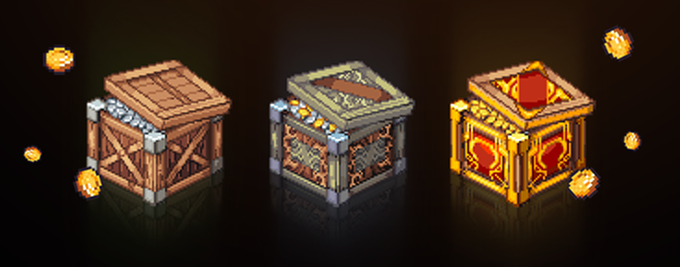
Cambria's official RSGP Loot Drop promotional image
It is worth separating the roles of Royal Favor (RF) and $RSGP. RF built up through play and Charter operation leads to $RSGP rewards under certain conditions. $RSGP, on the other hand, is designed to be locked and used to vote on running the treasury or allocating incentives to particular game activities. In short, RF is a measure tied to rewards for game activity, and RSGP is a way to take part in running the game's economy, such as allocating incentives.
The published Genesis introduction presents a Bribes system that offers reward chests funded by revenue from the game. USDC and Charters are given as example rewards, but the actual payout size and individual returns are not guaranteed
In this structure, which activities incentives flow to, such as hunting, crafting or transport, can shift where players take part and how the in-game economy develops
However, ecosystem rewards through RSGP and expedition reward settlement through Gold are separate structures. Holding $RSGP does not guarantee expedition income
Meanwhile, the $RSGP token launch and start of trading were announced for October 29, 2026. The token launch, the Genesis game opening and individual reward claims are separate schedules, though
What is the Founding Charter NFT
Where Gold Rush's Royal Charter was a season pass with Energy recovery and various features, the Founding Charter is an NFT designed to give extra content and reward opportunities in the Genesis season.
The first Founding Charters, minted on Ethereum, number 4,096 in total: 512 Viceroys and 3,584 Citizens. This first mint is called Voyage I, and Charter holders are designed to have rights to RF rewards, asset drops and some higher-level content
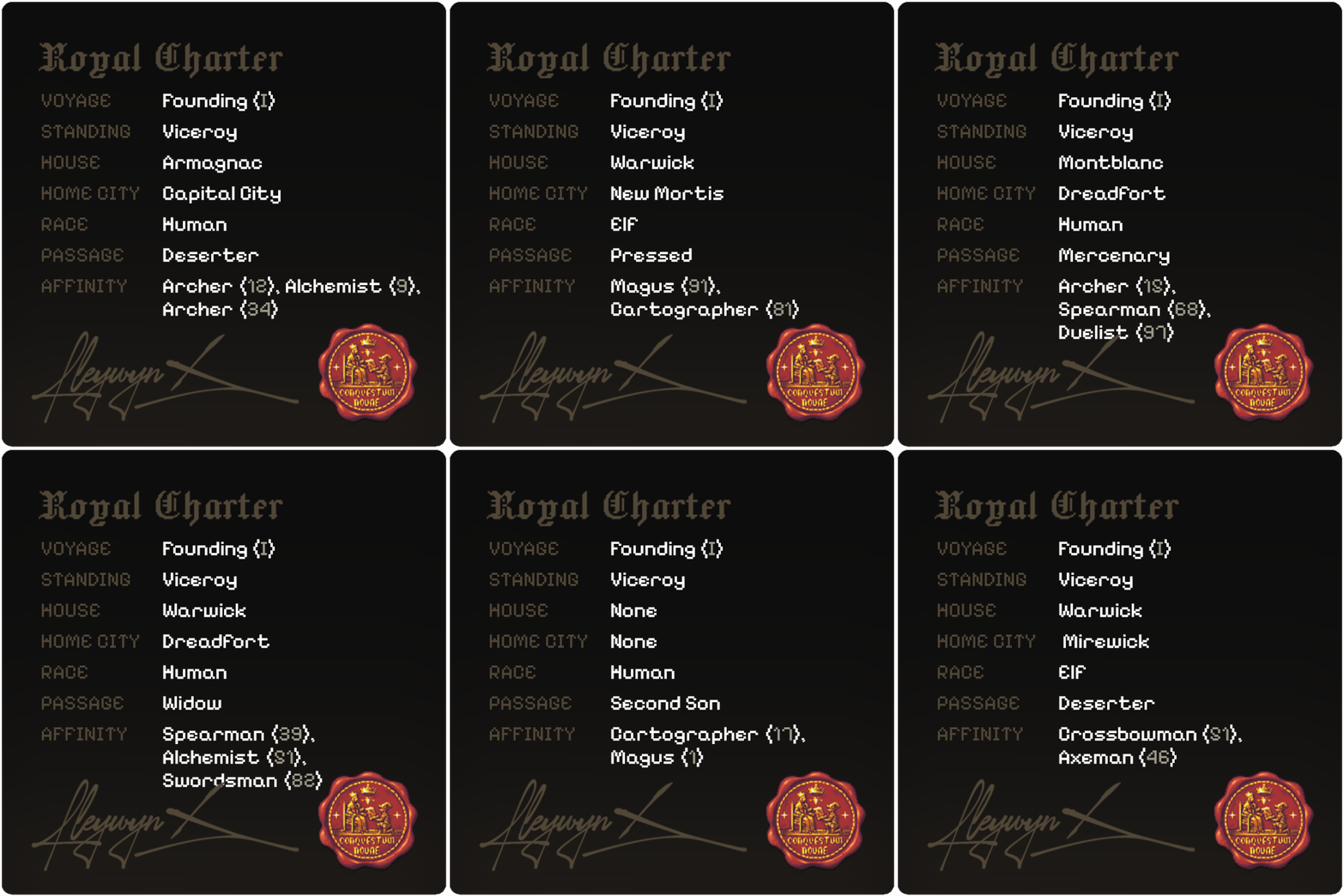
Traits given to Founding Charters, such as House, Home City and Affinity
Each NFT carries a House, a Home City and a trait called Affinity. Affinity is the potential for how far a given role can grow, which is different from an effect that directly raises combat stats. Basic play and role training are possible without a Charter
What is interesting is that you can share some of the benefits through a contract with a holder without owning the NFT yourself. Two ways have been set out for this
| Type | Tenancy (rental) | Sponsorship |
|---|---|---|
| Energy cost | Paid by the player | Paid by the sponsor |
| Gold rewards | Kept by the player | Split by contract |
| Extra rewards | RF and asset drops split with the holder | Silver and other rewards split by contract |
Tenancy means renting only the Charter and paying the Energy for play yourself. Sponsorship, by contrast, means the holder provides both the Charter and Energy and splits the rewards with the player
This lets NFT holders support other players' activity without playing themselves, and gives players without an NFT a way into extra reward opportunities
However, the Crown Ledger that manages these contracts had not opened as of the October 2026 public documents, and its features are to come in stages. Before taking part, you should check the Energy cost, the reward split and the rights available.
How play changes in a lasting world
Will it start over when the season ends this time too
Gold Rush was about growing and farming fast over ten days, and what mattered was how much Silver you had gathered by the end of the season
The Genesis season, by contrast, aims for a world that keeps going. Beyond maximizing rewards in a short time, longer-term strategies come to matter, such as growing a character over time, building expertise in a role or operating around a stronghold
However, a lasting world does not mean every record of growth and every currency is kept forever. In April 2026 the developers described a plan to run the main endgame economy as competitive seasons lasting several months while keeping part of each character's growth record. The Genesis introduction since then has stressed a persistent world, but the length of seasons and the scope of resets have not been firmly announced yet
What matters in the end is how long-term character growth and seasonal competition will coexist. It is worth watching how much carries over, not only character proficiency but also gear, currencies and the economic activity players build
Resources and markets differ from city to city
Genesis is set to bring in a structure in which each city has different resource supply, with banks and exchanges separated by region. Players will choose which city to gather in and where to store or sell what they gather
| City | Main resources supplied | Resources in short supply |
|---|---|---|
| The Capital | Cloth, fish | Fiber, stone |
| New Mortis | Ore, stone | Food, wood |
| Mirewick | Wood, reagents, poison | Stone, grain |
| Thorin's Peak | Ore, stone | Cloth, grain |
| Dreadfort | Wood, ore | Food, potions |
| Driftmoor | Leather, crafting materials | Iron, wood |
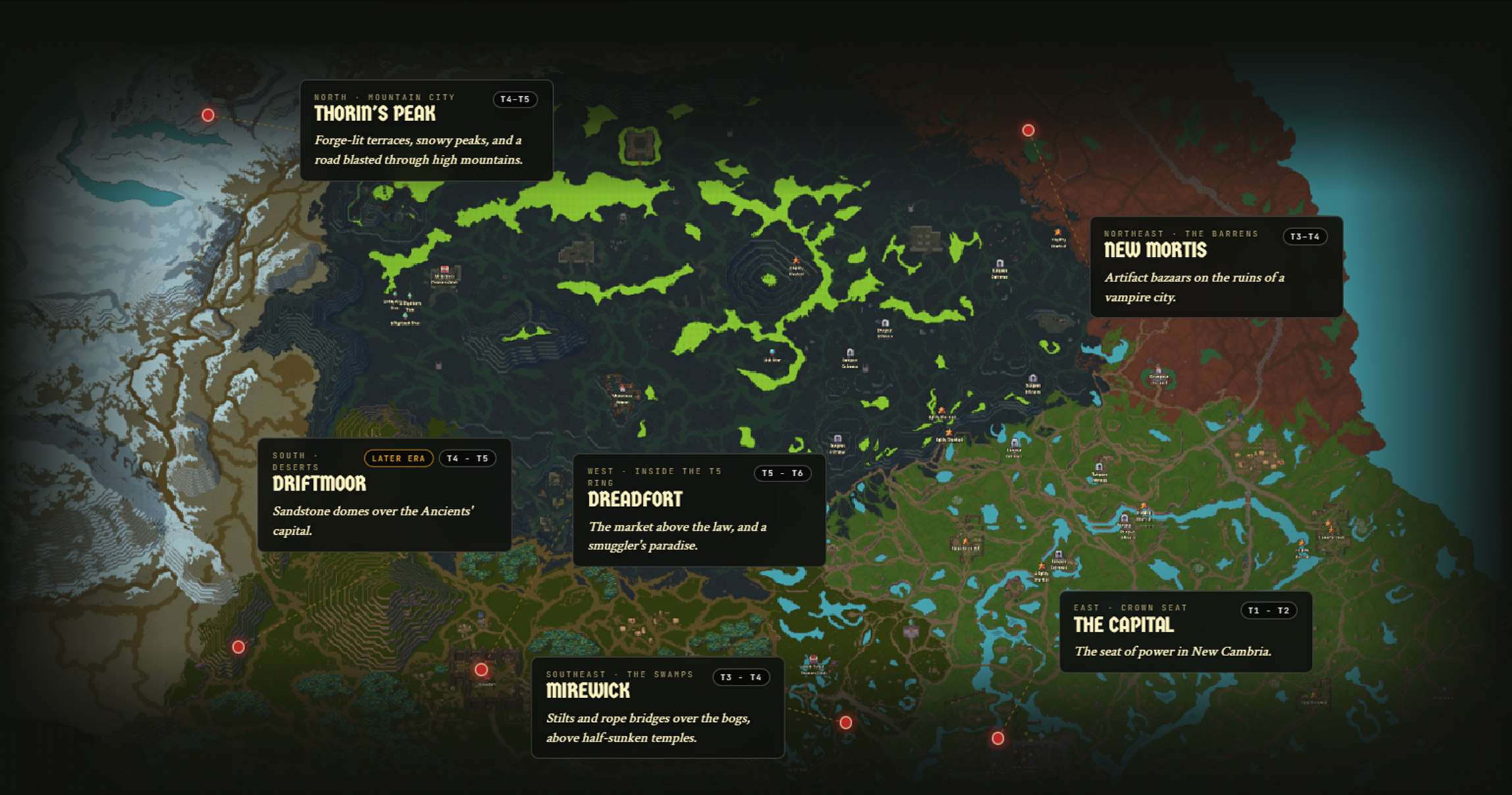
The official world map showing the Genesis season's main cities and regions
In this structure you can gather resources in an ore-rich city and haul them to a city that lacks them, or trade on price differences between regions. Even without fighting directly, you can specialize in gathering, crafting, transport and trade.
Moving between cities carries risk, of course. Some players haul goods and some teams escort them, while others lie in wait on trade routes to take the goods. So you have to weigh not just price differences but transport costs and the risk of losses to PvP
The table summarizes the resource supply by city given in the official documents; some regions, such as Driftmoor, are set to open later.
Weapon and armor talents added in Genesis
Genesis adds a new Talent system to weapons and armor. The talents you choose change how you attack and survive, so you can use different combat strategies even with the same weapon
For example, you can focus damage on one enemy, or pull several enemies together and create openings for teammates with slows and roots. Your role in the party changes with your mix of weapon and talents.
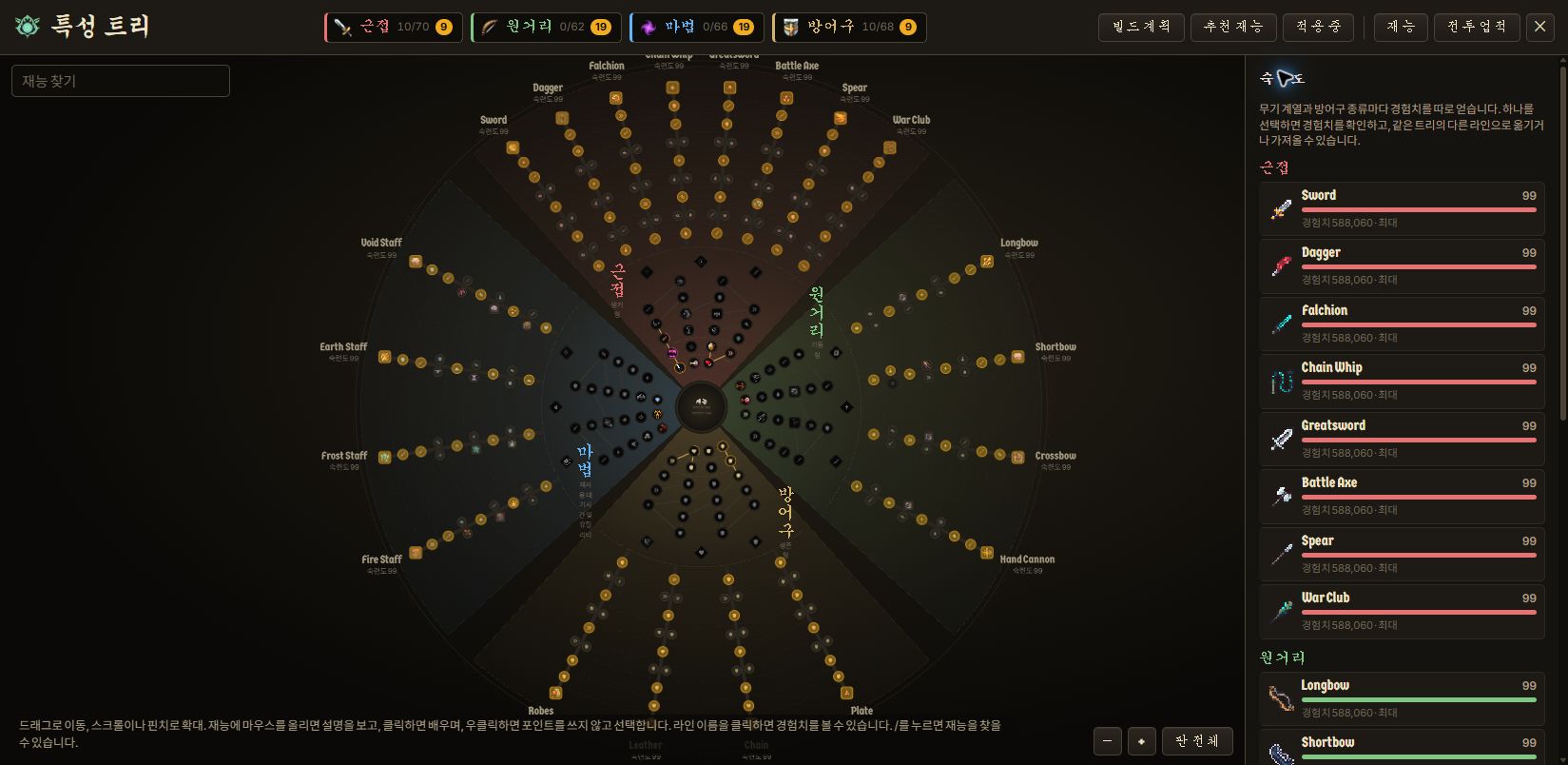
The weapon and armor talent tree shown on the testnet. It may change at launch.
| Weapon or armor | Main combat traits |
|---|---|
| Swords and daggers (Sword · Dagger · Falchion) | Chained attacks, poison and focused single-target attacks |
| Other melee weapons (Chain Whip · Greatsword · Battle Axe · Spear · War Club) | Taunts, area attacks, and fighting with slows and roots |
| Bows (Longbow · Shortbow) | Keeping distance, fast chained attacks and picking off isolated enemies |
| Crossbows and firearms (Crossbow · Hand Cannon) | Area attacks and control of enemy position and movement |
| Fire and frost magic (Fire Staff · Frost Staff) | Burns, area damage, slows and freezes |
| Earth and void magic (Earth Staff · Void Staff) | Disrupting enemy attacks, healing and controlling monsters |
| Heavy armor (Plate · Chain) | Defensive traits against melee and ranged damage |
| Light armor and robes (Leather · Robes) | Managing the movement resource, handling magic damage and survival |
The above groups the 20 proficiencies and 336 talents seen on the October 25, 2026 testnet (v2.19.54) by family. Actual effects depend on the talents and gear you choose, and the resource used for movement is separate from Energy, the expedition cost
Gear is set to extend to T6 and T7
A copy of the Genesis First Look presentation introduces an overhaul that extends gear grades up to T7. This is a measure of gear progression, separate from the region tiers described earlier
Early on you learn the game with basic T1 to T3 gear, and from T4 you start to obtain higher gear through crafting and trading and take part in the gear economy in earnest
| Gear tier | Gear name | Equip requirement | Main traits |
|---|---|---|---|
| T4 | Adamantine | 40 | Where gear crafting and trading begin in earnest |
| T5 | Obsidian | 60 | Mid-level gear progression |
| T6 | Dragonsteel | 80 | Guild-level resource supply and cooperation |
| T7 | Cambrian | 90 | Top gear that needs rare raid materials |
The higher the gear, the more raids, crafting and cooperation between players matter, not just gathering. Raids yield rare materials, which crafters combine with the resources gatherers collect to finish the gear. So as gear tiers rise, splitting roles within guilds and between players matters as well as individual growth
Apart from gear tiers, an enchantment system with levels 0 to 3 was also introduced. Gear of the same tier performs differently depending on its enchantment level, and the presentation also showed Heirlooms that rarely appear in crafting and armor split into 15 types
In the end, the progression system widens toward deciding which gear to craft and enhance, and how to secure the materials it needs, not just obtaining higher-tier gear
The above is an overhaul summarized from a copy of the First Look presentation kept on an unofficial site, and whether it will finally apply has not been confirmed. Equip requirements, mining proficiency and crafting conditions are different measures.
Pendants: choosing strengths and weaknesses together
Genesis also introduces pendants, which apply a boost and a drawback together. You can equip them in two slots, and they work by raising attack at the cost of some defense, movement or recovery
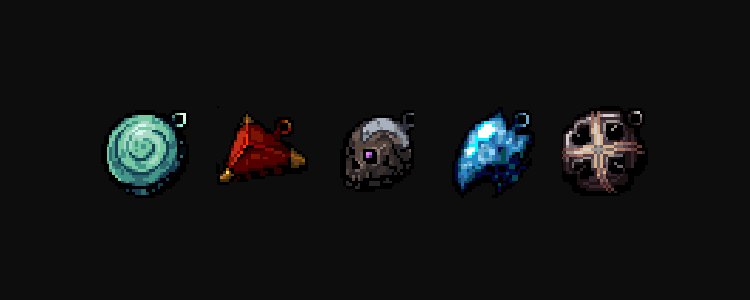
Pendants newly introduced in the Genesis season
For example, an attack-focused mix helps you kill enemies quickly but can make it harder to survive or escape when things turn dangerous. So rather than simply picking the highest stats, it matters to combine strengths and weaknesses to fit your weapon, talents and role in the party.
Cambria Dungeons, a separate game mode, also has a pendant system, but that mode's enhancement and storage/destruction rules should be kept apart from Gold Rush and the Genesis season.
What global guilds are in Cambria
Cooperation among many players matters, not only in hunting and PvP but in preparing expeditions, supply and sharing loot, so the guild you join also shapes your experience a great deal
Each global guild has its own main content and way of running, and the leading guilds are these
| Guild | Main traits |
|---|---|
| MANA | A Brazil-based guild that enjoys both farming and PvP and focuses on members' growth and sharing combat strategy |
| MOB | A competitive guild that values PvP and season results and takes an active part in team fights and the race for rewards |
| ENEMY | A combat-focused, PvP-centred guild that concentrates on fights with other players and team battles |
| Synergy | Built around organized farming and group fights, it holds regions, runs bounty work and shares gear and farming information |
When choosing a guild, it is good to look not only at your play style but also at its main play hours and language, whether it supports gear and Energy, and how it shares costs and rewards. A guild focused on PvP and one that runs farming and crafting together can make for quite different experiences
Which teams played from Korea
KDP too started out in MANA, an overseas guild, and the next season joined a Korean guild led by the LimeLight side. At the time the Korean community ran guilds named LimeLight and KOREA
For S3 they announced a plan to gather Korean players scattered across many chat rooms into the KOREA guild and run it with no guild tax. The aim was to help new players settle into the game through a beginner's guide, gear and currency support, PvP cooperation and streams
Later, the December 2025 KOREA support announcement shared news of a grant from Ronin along with a plan to give members Energy Orbs. The idea was to ease the cost of early play and support Korean players' participation.
Guild tax and support details follow the recruitment and running notices of the time and may change by season.
Waiting for the Genesis season
What we look forward to most in Genesis is the growth of city economies and the crafting and transport systems. We hope for all kinds of play: loading a wagon with supplies to hunt for longer, escorting wagons between cities with guildmates, or raiding other guilds' convoys. It would be even more fun if the guild rivalry we knew in Gold Rush grew beyond simple PvP into competition over resources and trade routes
According to the developer's October 25 test report, a small playtest was held for Charter holders, and a testnet open to more players is being prepared. From here, it remains to be seen how the published systems work in the actual game
If you are new to Cambria, we suggest starting with small expeditions and trying hunting, gathering, crafting and trading one at a time. Joining a guild and moving with other players is also a good way to learn the game
We too look forward to seeing how the fun of cooperation and competition we had last season develops in Genesis. We want to see for ourselves whether a world where players take on their own roles and build the economy, beyond a game for earning rewards, really takes shape
Sources
- [1]Cambria — S3 play and loot settlement
- [2]Cambria — S3 resources, crafting and trading guide
- [3]Cambria — S3 regional tiers and Energy
- [4]Cambria — S3 Player Killing, death penalties and Outlaw rules (WIP)
- [5]Cambria — S3 final results and Silver reference values
- [6]Ronin — S3 launch and individual reward announcement
- [7]Cambria — Genesis play, economy and RSGP introduction
- [8]Cambria — Founding Charter traits, delegation and sponsorship
- [9]Cambria — official account and current announcements
- [10]Cambria — development update on seasons, raids, crafting and regional economies
- [11]Genesis First Look presentation copy — an unofficial archive of the equipment overhaul
- [12]Cambria — official Pendant introduction
- [13]LimeLight — public forward preserving the S3 Korean recruitment notice